
1. Price Growth: 2020–2025
- Over the past five years, property prices in Bali have increased at an average rate of ~7% per year, according to multiple reports. In high-demand areas, appreciation has been much faster—some spots posting 15–30% annual growth.
- For example, Canggu saw yearly price growth of 20–30%, Seminyak/ Petitenget around 15–25%, and Uluwatu the fastest at 25–35%, while Ubud rose 12–18% annually.
This rapid appreciation means that properties bought around 2020–2021 could potentially double or triple in value in just 3–5 years.
2. Region-by-Region Entry Points & Yield Outlook
| Location | Price per m² (USD) | Avg Annual Yield |
| Canggu | $2,000–2,600 | ~12–15% |
| Seminyak | $2,300–3,000 | ~8–10% |
| Ubud | $1,300–2,000 | ~7–9% |
| Sanur | $1,450–1,850 | ~7–9% |
| Emerging areas (e.g. Melasti, Tabanan) | $700–1,650 | ~12–15% |
For emerging zones like Tabanan or Melasti, lower entry prices and strong future appreciation (ROI potential up to 15–20%) make them particularly appealing to early investors.
3. Tourism as Demand Catalyst
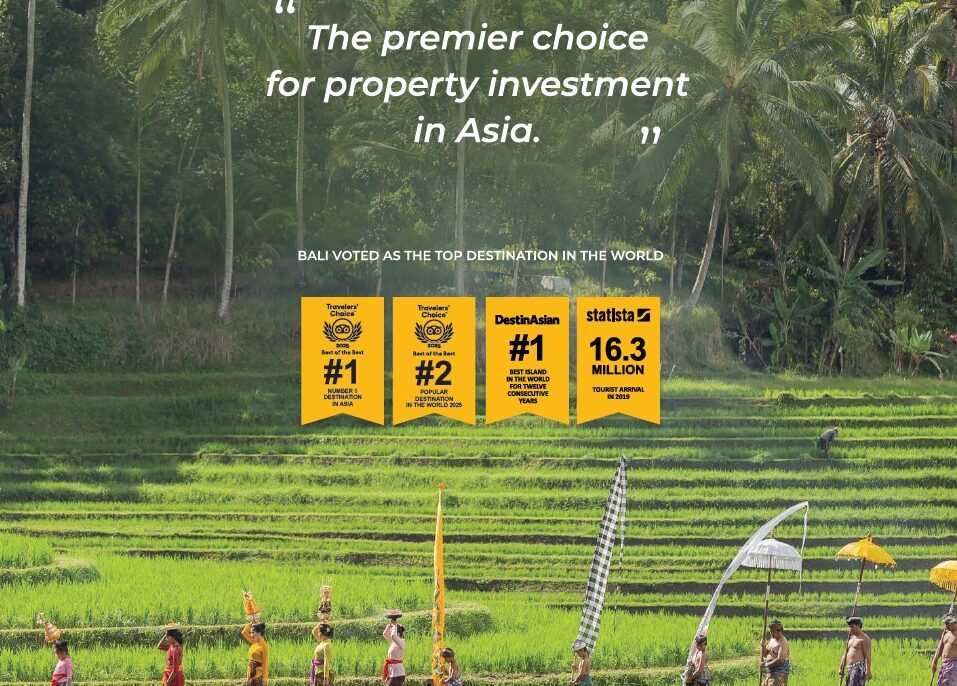
- Bali’s tourism recovery has been remarkable: around 5.23 million international arrivals in 2023 surged to over 6.3 million in 2024—an increase of nearly 21% year-on-year.
- Forecasts point to 6.5 million+ arrivals in 2025 and beyond.
This translates to consistently high occupancy rates (average 65–80% in top areas) and short-term rental yields of 7–15%+—especially strong in luxury and serviced apartment segments.
4. Investment Model Returns
- Bali’s rental yields for serviced apartments or condotels remain solid: typically, 8–12% annually, with top properties in Canggu or Uluwatu reaching up to 15–20% net yields.
- According to local investors and online forums:
“ROI projected at 10–16%” from leasehold villas/apartments
One investor noted a Pererenan villa bought for USD 200k in 2020 now valued at USD 800k in 2023.
These returns amount to some properties effectively paying themselves off within 5–7 years, with rental surplus and capital gains thereafter.
5. Regulatory & Infrastructure Catalysts
- Foreign investment regulations have improved, including longer leasehold periods (30+ years with renewal), streamlined Right-to-Use (Hak Pakai) processes, and visa/investor incentives.
- Major infrastructure improvements are underway: MRT mass transit lines connecting Ngurah Rai Airport with key tourist nodes, expansion of roads, and new hospital and tourism hubs like Sanur KEK zone. These developments boost accessibility and property values.
Why 2025 Is a Real Opportunity for Investors
- Strong track record of capital growth—properties in hotspots like Canggu and Uluwatu have grown 20–30% annually since 2020.
- Solid rental performance—consistent yields of 8–15%, especially from short-term and serviced models.
- Emerging hotspots offer entry bargains, e.g., Tabanan or Melasti at USD 700–1,650/m² with yield potential up to 20%.
- Upgrading infrastructure and smoother foreign investment rules reduce friction and boost long-term value.
Investor Takeaway
If you had bought a villa or serviced apartment in Canggu or Uluwatu back in 2020, your capital may have appreciated by 100–200% by now. Meanwhile, less saturated zones like Tabanan or North Bali still offer lower-cost opportunities with strong upside.
Combined with consistently high tourist demand, improved regulations, and strong rental income prospects, Bali’s real estate market in 2025 is shaping up to deliver both passive income and capital growth.
Final Thoughts
- Bali’s real estate has seen strong, consistent price growth: 7% average per year, and 15–30% peak growth in areas like Uluwatu.
- Rental yields remain strong at 8–15%, depending on location and model.
- Emerging areas still offer value-add opportunities with both appreciation and rental income upside.
- Infrastructure and regulation improvements continue to support the investment case.
Considering investing? Let’s explore specific high‑ROI projects or serviced apartment opportunities that suit your strategy! Contact me now